
Creating a Buzzworthy Curriculum: Jones Valley Teaching Farm

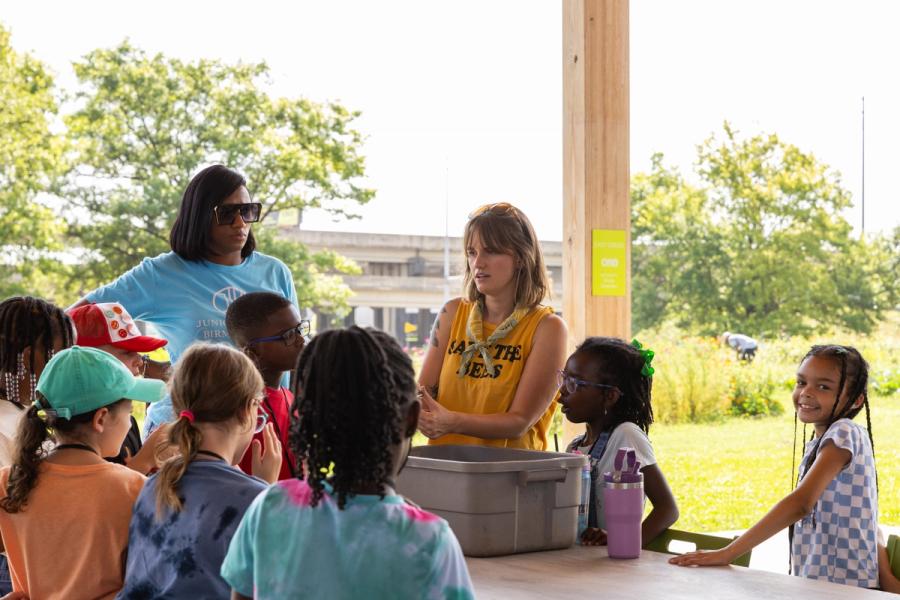
Bethany Boatwright, Bee Team lead at Jones Valley Teaching Farm, teaching students the importance of honeybees and the process of pollination.
By: Javacia Harris Bowser
Bethany Boatwright believes children can learn a lot from honeybees. They can learn to have respect for nature and an appreciation for time outside. They can even learn to be brave.
Boatwright has seen this firsthand working with students in her role as an instructor and Bee Team lead at Jones Valley Teaching Farm in downtown Birmingham. Now, thanks in part to the Alabama Power Foundation, even more students will learn these buzzworthy lessons as they explore the process of pollination.
The Foundation awarded Jones Valley Teaching Farm a grant to add pollination education and honeybee management to its nationally recognized Good School Food curriculum. Now Birmingham City Schools students across the district have access to bee-related education.

“We have so many kids come in for camp and field trips who are terrified of bees, but they leave really excited about them,” Boatwright said. “They understand the importance of bees and other flying insects, and they’ve got more respect for them.”
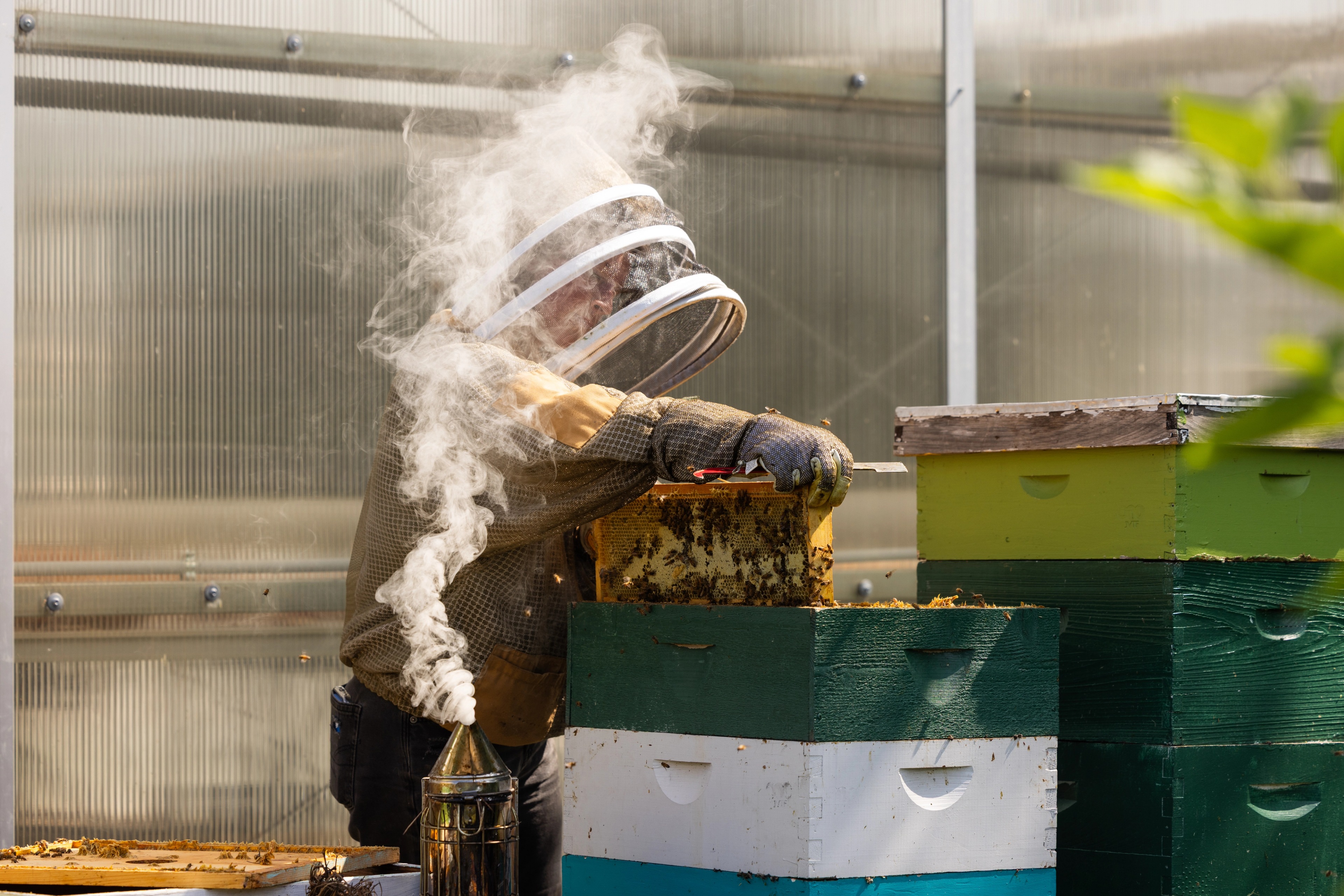
Did you know the first queen bee to hatch in a colony will sting to death all the other potential queens to secure her throne? That’s just one of the many jaw-dropping facts kids learn about the secret life of bees at Jones Valley Teaching Farm.
“I sprinkle in facts like that, and kids are like, ‘Oh, my goodness!’ but they’re locked in,” Boatwright said. “And then they love to go share those little facts with their friends.”
Through bee education, Boatwright not only gets kids excited about learning, she also enhances their respect for nature. If we don’t have bees, and we don’t have our pollinators, then we don’t have anything.”
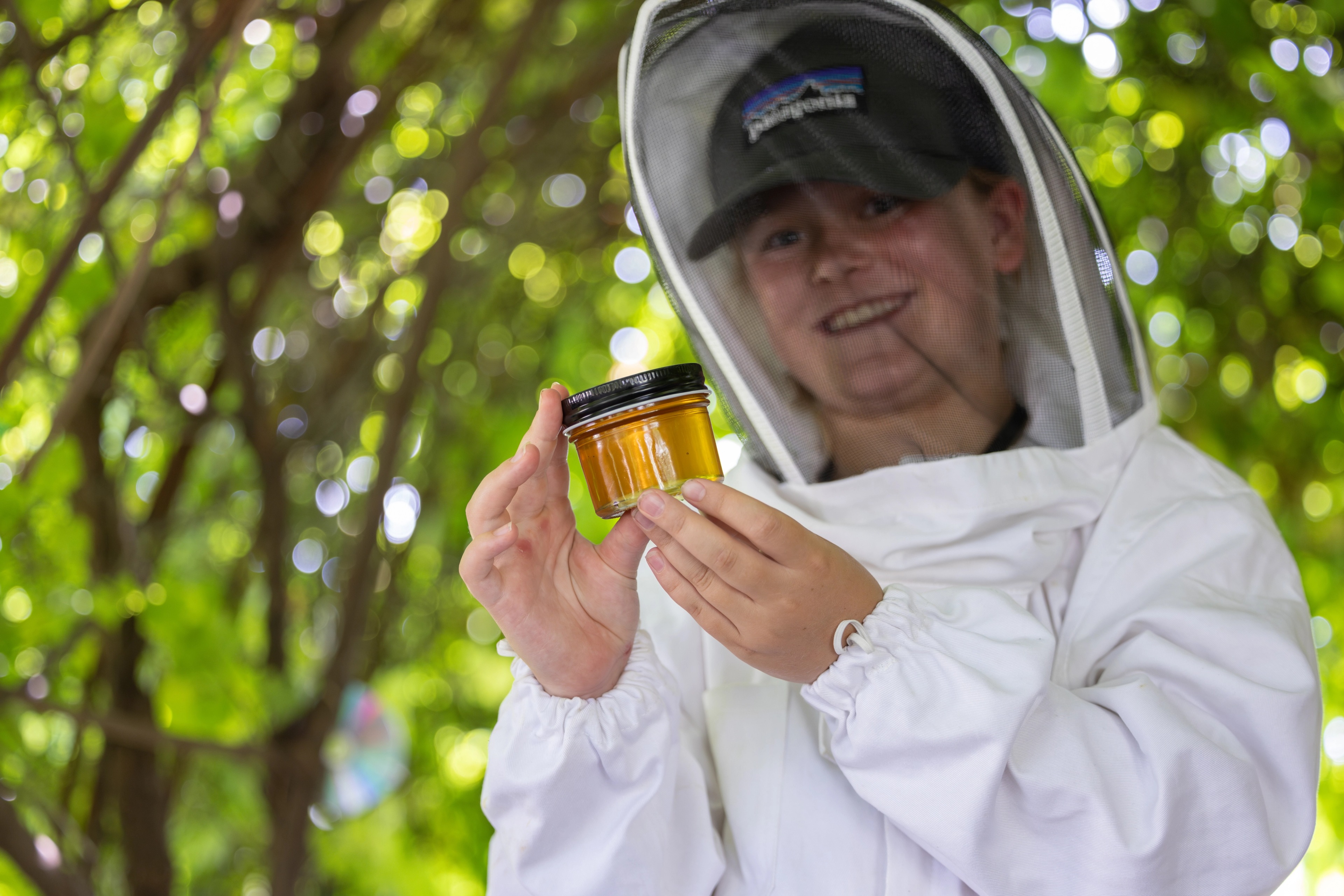
“If we don’t have bees, and we don’t have our pollinators, then we don’t have anything,” she said. “I think with our education becoming more technology-based, which is not necessarily a bad thing, there’s a little less exposure outside. Sometimes I’ll watch kids play, and it’s like watching a Sims (video game character) that got all of its events canceled – it just kind of stands there. If it’s not something you do a lot, then you feel like these things are not for you. But if we can give them exposure and give them touch points, they feel more ownership and are more courageous.”

 Expanding Care, Expanding Hope: St. Michael's Medical Clinic
 Alabama Power Foundation empowers emerging professionals through Points of Light Advisory Council